





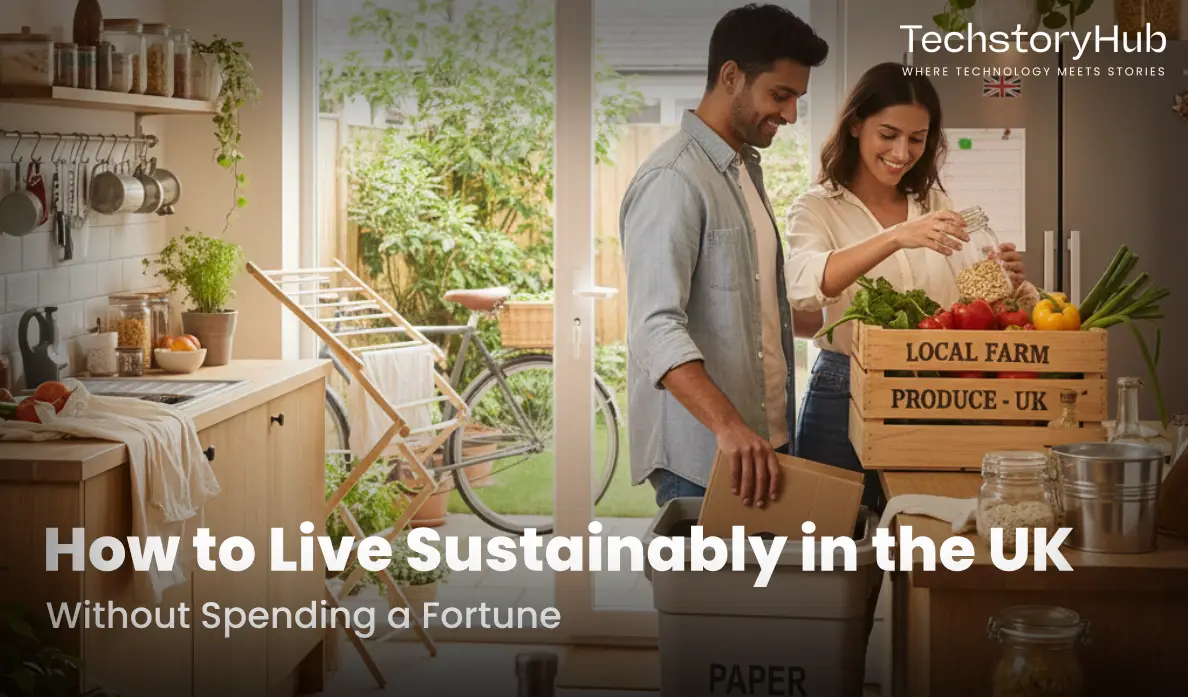
Sustainable living in the UK is not just a trend—it’s a lifestyle that helps the environment and saves money. However, many people assume that living sustainably means spending a fortune on eco-friendly products. In reality, it’s entirely possible to reduce your carbon footprint, eat responsibly, and live greener without breaking the bank.
In this guide, we’ll explore practical tips, free resources, and strategies to live sustainably in the UK while staying budget-conscious.
Why Sustainable Living Matters
- Also, living sustainably helps reduce waste, energy consumption, and pollution.
- Furthermore, sustainable choices often improve your health and quality of life.
- Moreover, adopting eco-friendly habits can inspire your community to do the same.
- As a result, you contribute to a cleaner environment while saving money.
Sustainable living is more than just recycling—it’s about conscious consumption, smarter choices, and long-term impact.
1. Reduce, Reuse, and Recycle
The simplest way to start is the classic 3Rs:
- Reduce unnecessary purchases. Only buy what you truly need.
- Reuse items wherever possible. For example, buy second-hand furniture or clothes from charity shops.
- Recycle correctly. Follow your local council’s recycling guide to ensure paper, glass, and plastics are processed properly.
Tip: Many UK councils offer free recycling services and collection points. Check your local council website for details.
2. Buy Local and Seasonal Produce
Food is one of the biggest contributors to your carbon footprint. However, by choosing local and seasonal produce, you can save money and help the planet:
- Visit farmers’ markets: Local markets often sell fresh produce at lower prices than supermarkets.
- Eat seasonal fruit and vegetables: UK-grown seasonal items require less transportation and are cheaper.
- Consider veg boxes or community-supported agriculture: Monthly or weekly subscription boxes often deliver fresh, local produce directly to your home.
Example: Buy UK apples in autumn instead of imported ones—they are cheaper and more eco-friendly.
3. Minimise Energy Use at Home
Reducing energy consumption is a win-win: you save money and lower your carbon footprint. For instance:
- Switch to LED light bulbs – they use less electricity and last longer.
- Use smart plugs or timers to avoid wasting energy on idle devices.
- Wash clothes at 30°C instead of higher temperatures.
- Unplug chargers and electronics when not in use.
Additionally, many UK energy providers offer free or discounted energy audits for households, helping you find areas to save.
4. Use Sustainable Transport Options
Transportation is a major source of emissions. Instead of relying solely on cars:
- Walk or cycle for short trips. It’s free and good for your health.
- Use public transport whenever possible—buses and trains reduce per-person emissions.
- Consider carpooling or ride-sharing apps to cut costs and reduce traffic.
- Explore electric bikes or scooters for eco-friendly commuting.
Tip: London and many other UK cities offer subsidised public transport for students and low-income residents.
5. Choose Eco-Friendly Products Wisely
You don’t have to buy expensive “green” brands to live sustainably. Instead:
- Look for refillable or reusable items: water bottles, coffee cups, and shopping bags.
- Buy second-hand or upcycled products whenever possible.
- Focus on quality over quantity—durable items last longer and reduce waste.
Also, check for UK-specific eco labels like the Soil Association Organic or Fairtrade Mark to make informed choices.
6. Reduce Food Waste
Food waste is both expensive and harmful to the environment. In fact, the average UK household throws away hundreds of pounds worth of food annually. To reduce waste:
- Plan your meals in advance and make shopping lists.
- Store food properly to extend its shelf life.
- Use leftovers creatively for soups, stews, or batch cooking.
- Compost scraps where possible—many councils offer free compost bins or collection.
7. Free & Low-Cost Resources for Sustainable Living in the UK
- Love Food Hate Waste – lovefoodhatewaste.com helps reduce household food waste.
- Recycle Now – recyclenow.com gives UK recycling guides by local council.
- WRAP UK – wrap.org.uk offers practical sustainability advice.
- Local Community Groups – Free workshops and clothing swaps often happen in UK cities.
In addition, apps like Olio or Too Good To Go help you get free or discounted food while preventing waste.
FAQs
1. Can you really live sustainably in the UK without spending extra money?
Yes. Many sustainable habits actually save money, such as reducing waste, buying second-hand, using energy efficiently, and choosing seasonal food. You don’t need expensive eco products to live sustainably.
2. What are the easiest sustainable habits to start with?
Begin with reducing single-use items, recycling properly, walking more, switching to LED lights, and planning meals to avoid food waste. These small steps make a big impact.
3. Are sustainable products more expensive?
Not always. Many reusable items save money over time, and second-hand options from charity shops or Facebook Marketplace are often much cheaper than new products.
4. What are the best free resources for sustainable living in the UK?
Websites like Love Food Hate Waste, Recycle Now, and WRAP UK offer free tips. Apps like Olio and Too Good To Go help reduce food waste at low cost.
5. How can I reduce energy bills sustainably in the UK?
Try washing clothes at 30°C, unplugging chargers, using smart plugs, switching to LEDs, and applying for UK energy grants or home insulation support.
6. Does buying local food really help the environment?
Yes. Local produce has lower transportation emissions, supports local farmers, and is often cheaper when bought in season or at farmers’ markets.
Final Thoughts
Living sustainably in the UK without spending a fortune is entirely achievable. By reducing waste, buying local, minimising energy use, choosing eco-friendly products wisely, and embracing sustainable transport, you can lower your carbon footprint and save money.
Also, using free UK resources and community initiatives makes green living easier and more accessible. Ultimately, every small action counts—together, they make a big difference for the planet and your wallet.