





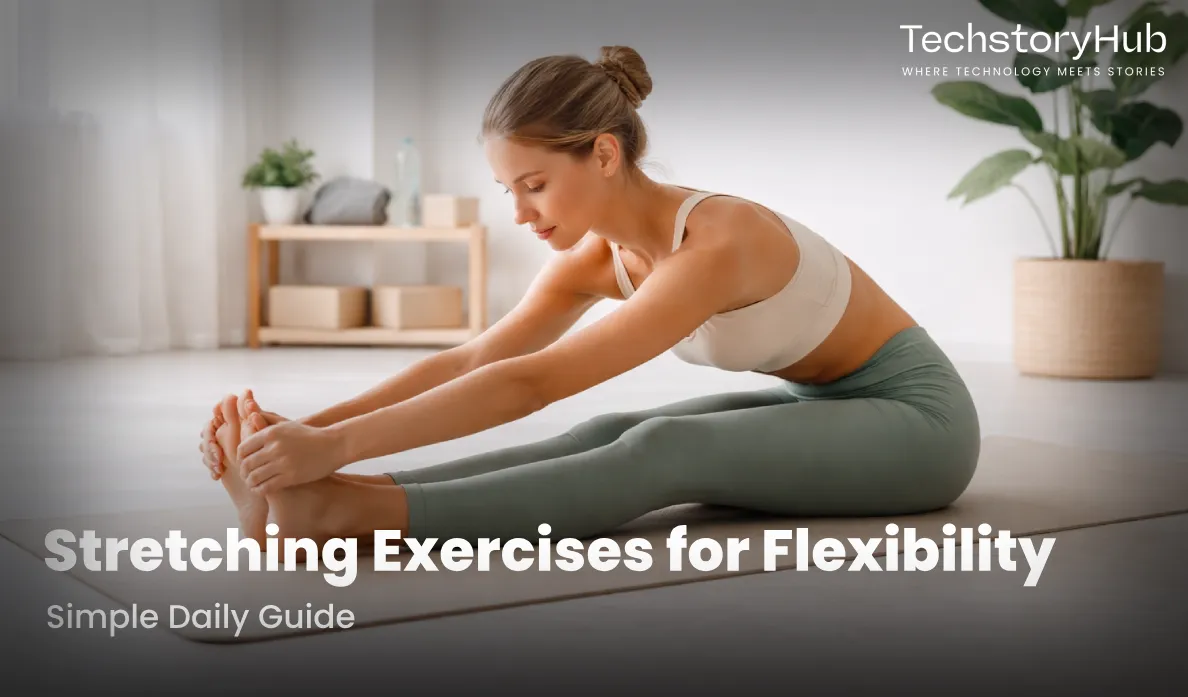
Stretching exercises for flexibility help your body move freely and feel relaxed. When you sit for long hours, muscles slowly become tight. This stiffness makes daily movement harder and can cause pain over time. Stretching helps release that tightness and keeps your body comfortable.
The best part is how easy it is to start. You do not need special tools or a gym. Just a few minutes each day is enough. No matter if you work at a desk, play sports, or are just starting out, stretching fits into any routine.
In this guide, you will learn simple stretching exercises for flexibility. You will also understand why stretching matters, the different types of stretches, and how to build a safe daily habit.
Benefits of Stretching Exercises for Flexibility
Improves Joint Movement
Stretching helps your joints move fully and smoothly. Simple actions like bending, walking, or reaching feel easier.
Reduces Muscle Tightness
When muscles stay still for too long, they tighten. Stretching increases blood flow and helps muscles relax.
Helps Prevent Injuries
Flexible muscles handle sudden movement better. This lowers the risk of pulls and strains.
Types of Stretching Exercises
Static Stretching
This means holding a stretch for about 15 to 30 seconds. It works best after exercise or before sleeping.
Dynamic Stretching
Dynamic stretches use slow and controlled movement. Arm circles and leg swings are common examples. These are good before activity.
Active Stretching
You stretch by using your own muscles without support. This improves balance and body control.
Best Stretching Exercises for Flexibility
Neck and Shoulder Stretches
Gently tilt your head from side to side. Roll your shoulders forward and backward. These stretches reduce tension caused by desk work.
Hamstring Stretch
Sit down and extend one leg. Reach toward your toes without forcing it. This stretch helps leg movement and posture.
Hip Flexor Stretch
Step one foot forward and bend the front knee slightly. This stretch is very helpful for people who sit most of the day.
Stretching Routine for Daily Flexibility
Morning Stretching
Morning stretches help wake up your body. Try arm swings, side bends, and light lunges.
After Exercise Stretching
Stretching after a workout helps muscles cool down and reduces soreness.
Evening Stretching
Slow stretches before bed calm your body and help you relax. Many people also sleep better after stretching.
Common Stretching Mistakes to Avoid
Bouncing While Stretching
Bouncing can hurt muscles. Always stretch slowly and hold the position.
Holding Your Breath
Breathe normally while stretching. Steady breathing helps muscles loosen up.
Stretching Too Far
You should feel gentle tension, not pain. Pushing too hard can cause injury.
How Long and How Often Should You Stretch?
Stretch Duration
Hold each stretch for 20 to 30 seconds. Repeat it two or three times.
Stretching Frequency
Stretch at least five days a week. Daily stretching gives the best results over time.
Who Should Do Stretching Exercises for Flexibility?
Stretching is helpful for almost everyone. This includes office workers, older adults, and athletes.
Common Questions About Stretching
Is stretching every day good?
Yes. Daily stretching helps muscles stay relaxed and improves flexibility faster.
Can beginners start stretching?
Yes. Start slow and focus on basic movements.
What is the best time to stretch?
Morning, after exercise, or before bed all work well.
Can stretching help back pain?
Yes. Hip and hamstring stretches are especially helpful for back comfort.
When will I see results?
Many people feel improvement within two to three weeks of regular practice.
Final Thoughts
Stretching exercises for flexibility are simple but very effective. They help your body move better, feel lighter, and stay pain free. Stretching does not take much time, which makes it easy to stay consistent.
Start with a few basic stretches and do them daily. Over time, your body will feel stronger, looser, and more comfortable in everyday movement.
👉 Want more fitness and wellness guides?
Subscribe to TechStoryHub and stay active, healthy, and informed.
- Daily Home Workout Guide
- Healthy Morning Routine Tips
- Wikipedia – Stretching: https://en.wikipedia.org/wiki/Stretching